The Deep-End Cosy Edit: Why Texture, Not Tone, Does the Warming

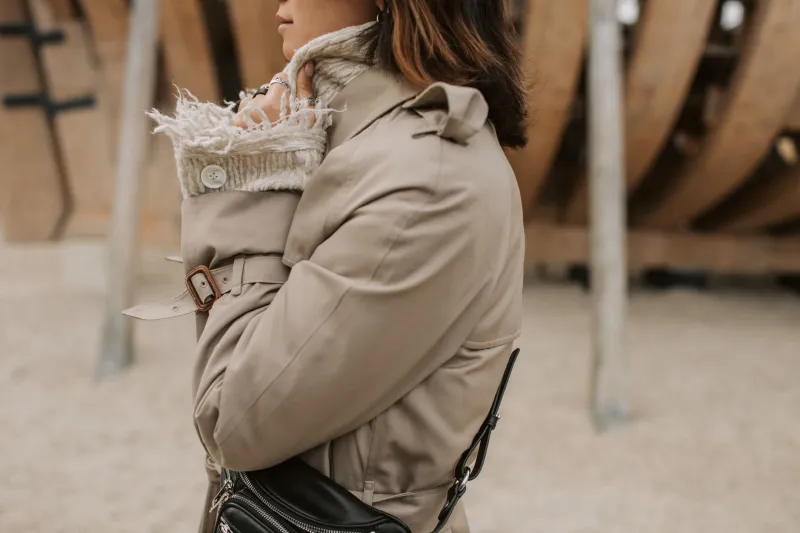
Photo: Pink Sherbet Photography from USA, CC BY 2.0, via Wikimedia Commons
There is a particular kind of winter dressing that looks warm but doesn't quite feel it. You know the one: a rail of oatmeal knits, cream coats and greige trousers, all photographed in soft light and styled with a mug of something steaming. It reads as cosy. It photographs as cosy. But standing at a bus stop in a damp February wind, a pale wool blend can leave you wishing you'd worn something with a bit more conviction.
That's not a dig at beige. It's a useful colour, and it has its place. But somewhere along the way, cosy became shorthand for a palette rather than a feeling. And that's a shame, because the actual warmth in a winter wardrobe comes from texture — from loft, brushing, pile, rib and hand-feel — not from the colour on the label. You can wear the darkest navy in your wardrobe and feel softer, warmer and more comfortable than you would in a pale cream knit that looks the part but does nothing when the temperature drops.
The beige default (and why it sticks)
Part of the reason pale neutrals dominate the cosy conversation is that they are easy to photograph and easy to shop. They signal calm, they layer without clashing, and they make a capsule wardrobe look tidy on a moodboard. But they also show every mark, every bit of tube-seat grime and every splash from a puddle on the walk to work. In a UK winter, that's a practical problem. A cream coat is a commitment. A chocolate corduroy trouser is a relief.
There's also the question of depth. Pale colours reflect light, which can make a heavy fabric look lighter than it is. Deep colours absorb it, which gives texture somewhere to live. A rust bouclé jacket has shadows in its loops. A forest-green ribbed knit has ridges you can see and feel. That visual depth is part of why a darker, textured outfit can feel more substantial without being bulkier.
Warmth is a surface, not a shade
Think about the clothes you actually reach for on the coldest days. They're rarely the smoothest ones. They're the brushed wool coat that feels faintly fuzzy under the hand. The corduroy skirt with a pile that traps a little air. The fleece gilet that looks almost too casual until you realise it's the warmest thing you own. The ribbed knit that grips the wrist and holds its shape. These are textural choices, and they do more for comfort than a colour ever will.
Loft matters, too. A brushed wool has a raised surface that creates a thin layer of still air — the same principle as a thermos. A bouclé has loops and gaps that do something similar. A fleece has pile. A ribbed knit has thickness and stretch. None of that requires a pale palette. In fact, deeper shades often hide the fluff and pill that come with textured fabrics, so you can wear them harder and wash them less anxiously.
The deep-end capsule: five textures to build around
This is where the practical bit comes in. You don't need a whole new wardrobe — just a handful of pieces that bring different surfaces into play.
Brushed wool coat. A navy or chocolate brushed wool coat is the anchor. It looks smart enough for the office and soft enough for the weekend, and the brushed finish makes it feel warmer than a smooth wool of the same weight. Look for a relaxed shoulder and enough room for a ribbed knit underneath.
Corduroy. A pair of wide-leg corduroy trousers in rust or forest is the easiest way to add warmth without adding bulk. The pile gives depth, and the wider leg keeps it modern. If trousers feel like a leap, a corduroy skirt with tights is just as good.
Bouclé. A bouclé jacket in navy or dark chocolate works as a soft alternative to a blazer. It has structure but gives at the shoulder, and the looped surface looks richer than a flat weave. Wear it over a fine ribbed roll-neck rather than a chunky knit to keep the line clean.
Fleece. A fleece gilet or jacket in a deep shade is the piece you'll wear for the school run, the dog walk and the tip run. It's not glamorous, but it's honest. Layer it under a wool coat on really cold days and you'll feel the difference.
Ribbed knitwear. A ribbed roll-neck in forest, navy or rust is the base layer that makes everything else work. The rib gives stretch and texture, and the roll-neck frames the face without the scratchiness of some wool blends. Choose a fine-to-medium gauge so it layers neatly.
Mixing surfaces without bulk
The trick to wearing several textures at once is contrast, not competition. A brushed coat over a fine ribbed knit works because one is lofty and the other is flat. A bouclé jacket with corduroy trousers works because both have surface interest but neither is chunky. A fleece gilet under a smooth wool coat works because the smooth layer keeps the silhouette clean.
A useful rule: one lofty texture per outfit. If the coat is brushed, keep the knit fine. If the trousers are corduroy, keep the top smooth or ribbed. If the jacket is bouclé, avoid a chunky cable knit underneath. You want the surfaces to talk to each other, not argue.
Colour can help here, too. Tonal dressing — navy coat, navy ribbed knit, dark indigo jeans — lets texture do the talking without the outfit feeling busy. Or pick two deep shades that sit well together: rust and chocolate, forest and navy, chocolate and charcoal. These combinations feel warm without relying on pale neutrals.
The takeaway
Cosy is not a colour you buy. It's a quality you feel when you put something on — the brush of wool against the wrist, the pile of corduroy, the give of a ribbed cuff. Pale shades can be part of that, but they don't have to be the whole story. This winter, try building your warmest outfits around deeper shades and more interesting surfaces. Start with one piece — a rust corduroy trouser, a navy bouclé jacket, a forest ribbed knit — and see how much warmer your wardrobe feels when texture leads the way.