The Quiet Half Hour: Three Repairs That Keep Cosy Clothes Going
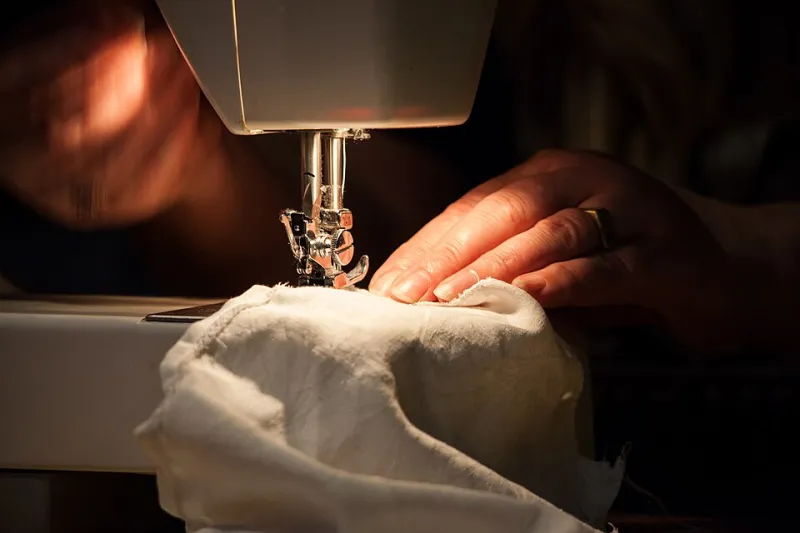
Photo: Tadeáš Bednarz, CC BY-SA 4.0, via Wikimedia Commons
There is a half hour in most weeks that nobody claims. Not the good half hour, not the one with a purpose — the odd one, usually on a grey afternoon with the lamp on and the radio doing something undemanding. Put a small tin beside your chair and it becomes the most useful half hour in the wardrobe's calendar.
Mending has a reputation problem. It gets filed under chores, alongside defrosting the freezer and sorting the paperwork. But there's a different way to see it: a repair is the only moment in a garment's life when you get to handle it properly. You learn where it thins, how it's constructed, what it's made of. It's less maintenance than acquaintance.
Why mending is a style act
A wardrobe of cosy clothes is an investment in softness — good knitwear, wool, flannel, the sort of pieces that improve with wear rather than degrade. But soft fibres are also the ones that need attention first. A jumper that bobbles at the cuff looks neglected rather than loved. A coat missing its second button looks like it's on its way out, even if everything else about it is sound.
The repair isn't cosmetic tidying. It's the difference between a piece reading as kept and a piece reading as finished. And in a season where we're all trying to buy less and wear better, that distinction does a lot of quiet work.
Repair one: the button that stays put
Loose buttons are the most common fault and the most misdiagnosed. Most people reattach a button exactly as the factory did, which is usually with four passes of thread and no shank. It comes loose again within a month.
The fix is a shank — a small gap between button and fabric so the button sits above the thickness of the coat or cardigan rather than clamping it flat. Thread the needle with a doubled length of cotton, anchor at the back, then bring the needle up through the button and lay a matchstick or a pin across the top of the button before you stitch over it. When you've made four or six passes, remove the pin, pull the button up on its new thread neck, and wind the thread around the shank a few times. Knot underneath. That's it. The button now moves with the fabric instead of fighting it.
Worth knowing: coat buttons take more strain than cardigan buttons, so use a heavier thread and give them six passes. If the fabric behind the button has started to fray, a tiny patch of interfacing or a small square of matching cotton behind the hole will stop it tearing further.
Repair two: the seam that's thinking about it
You can usually spot a seam about to fail before it does. It looks slightly puckered, or there's a faint shadow where the thread has loosened but not yet broken. Underarm seams, pocket corners and the side seams of knitwear are the usual suspects — all places where the fabric moves.
Catch them early with a simple backstitch and a thread matched as closely as you can. Work three or four stitches either side of the weak point rather than only over it, so the repair shares the load. On a knitted piece, use a blunt-tipped needle and follow the original line rather than pulling the fabric into a new shape; a slightly loose tension is better than a tight one, because the knit needs to stretch with you.
If a knit seam has actually split, mattress stitch is the technique to learn — it's the invisible join that pulls two edges together without a visible ridge, and it takes about ten minutes to get the hang of on a scrap of spare yarn. The whole repair is a quiet, repetitive, oddly satisfying thing to do, and the finished result looks like nothing happened, which is exactly the point.
Repair three: the bobble, handled properly
Pilling isn't a sign of poor quality. It's a sign of soft fibre doing what soft fibre does — short fibres working loose and tangling into little balls on the surface. Cashmere, lambswool, merino and any blend with a bit of angora will all do it, and it happens most where things rub: cuffs, underarms, the side of a bag strap.
The instinct is to reach for a razor. Please don't. A wet-shave razor slices the fibre and leaves the surface thinner, and the pills come back worse within a fortnight.
Use a cashmere comb or a fine fabric shaver instead, and work with the garment flat. Go in one direction, in short strokes, with a light hand — you're lifting the pills off, not shaving the knit. Do it before washing rather than after, because a wash plumps the fibres and makes the pills harder to remove cleanly. Then fold rather than hang, and give the piece a rest between wears; a jumper worn three days running pills more than the same jumper worn three times in a fortnight.
Knowing when to stop
Not everything should be mended, and pretending otherwise turns a pleasant ritual into a guilt exercise. Let a piece go when the elbows have gone sheer, when wool has felted into a solid mat that no amount of care will loosen, when a moth has worked through a shoulder rather than a hem, or when the repair would cost more in your time than the piece is worth to you.
There's a middle category too: the piece that's still perfectly good but no longer for you. That one goes to somebody else, or to a textile bank, without ceremony and without guilt.
The tin by the chair
You don't need much. Two needles — one sharp, one blunt for knits — a small card of grey thread and one of navy, a few spare buttons harvested from worn-out shirts, a cashmere comb, a tiny pair of scissors. It fits in an old biscuit tin and it lives wherever you sit.
And then, once a month or so, the quiet half hour. The lamp on, something on the radio, a jumper turned inside out on your knee. It's not glamorous and it won't make a photograph. But it's the reason the good coat still looks like the good coat in February, and there's a particular sort of satisfaction in that which no new purchase quite matches.